HOME ABOUT REVIEWS INTERVIEWS SUBSCRIBE CONTACT FACEBOOK TWITTER
Showing posts sorted by relevance for query interview:. Sort by date Show all posts

Interview: Chef Tyler Florence


Chef Tyler Florence has hosted several programs on The Food Network including Food 911 and How to Boil Water and currently hosts Tyler's Ultimate. He is a graduate of the College of Culinary Arts at the Charleston, South Carolina campus of Johnson & Wales University.

In addition to his work in television, he has also developed three new restaurant concepts in the San Francisco Bay Area: Rotisserie & Wine in Napa, El Paseo in Mill Valley, and the Wayfare Tavern in San Francisco. Florence is also the author of several cook books including:

Family Meal

Dinner at My Place
Stirring the Pot
Tyler's Ultimate: Brilliant Simple Food to Make Any Time
Eat This Book: Cooking With Global Fresh Flavors
Real Kitchen

also mentioned in this interview:
Alexia Foods
Husk Restaurant - Charleston
McCrady's Restaurant - Charleston
The Lion - New York City
Wayfare Tavern - San Francisco

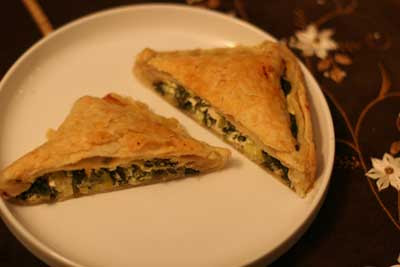
Spanakopita Recipe σπανακόπιτα

spanakopitaSpanakopita or spinach pie is a popular snack in Greece. It's filling consists of spinach and other greens as well as feta cheese. When spinach is scarce, other greens such as chard, sorrel, and leeks are substituted.

Note: I made 1/2 of this recipe and it yielded 16 pieces.

Ingredients:

3 lbs. Spinach
4 bunches of Scallions
2 bunches of Dill
1 bunch of leeks
6 lbs. of Feta cheese
1 lbs. of Parmesan cheese
½ cup of The Artisanal Kitchen Three Olives Olive Oil
6 eggs
6 sheets of traditional phyllo
2 tablespoons butter
Salt & Pepper

Preparation:
  1. Pre-heat oven to 375 degrees.
  2. Wash, cut and mix greens together in a bowl. Allow to dry completely.
  3. Sautee greens in TAK Three Olives Olive Oil for five minutes.
  4. Place greens back in bowl.
  5. Add eggs and cheese to the greens and mix well.
  6. Lay the phyllo on the bottom of the pan leaving so of the phyllo to hang off the pan.
  7. Brush on TAK Three Olives Olive Oil on the phyllo.
  8. Place mixture of greens and cheese into the phyllo evenly. Cover mixture with the remaining phyllo pieces and fold the pieces from the bottom over the mixture.
  9. Brush the top layer of the phyllo with TAK Three Olive Olive Oil and butter.
  10. Cook for 45 minutes at 375 degrees.
  11. Cool and Enjoy!
Recipe courtesy of Anna Zoitas [interview]

Greek flag Greece [ print this recipe ]

Lamb Schawarma Recipe שווארמה

schawarmaDuring my interview with Levana Kirschenbaum, I learned about a type of sandwich called schawarma that is a signature Israeli dish. So I tried to see if I could find any recipes for schawarma to understand how it is made. I found a couple of recipes that used chicken as the main ingredient. However, when I think of Middle Eastern cuisine, lamb comes to mind. The recipe that follows is a hybrid of a few that I found with some of my own improvisations.

Last weekend was the first time that it was really warm here and it felt like spring. So we decided to grill the lamb for the schawarma outside on the Weber.
lamb

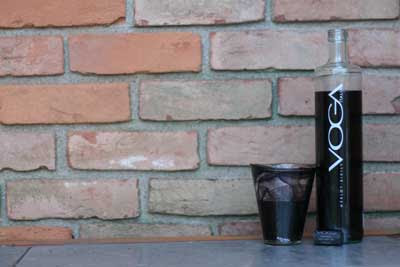
We also decided to try a new wine with this dish. Since schawarma is popular across the Mediterranean, we wanted to find a wine from this region as well. We decided on Voga Merlot. This Sicilian wine (in a most un-traditional bottle) turned out to be an exceptional pairing with the lamb schawarma.
Voga merlot

This recipe is all about prep-work. You will need to marinade the lamb overnight. In addition, you will need to slice up a few vegetables for condiments as well as make a tahini paste and tzatziki. There is a little bit of work involved in getting the condiments ready but if you get a few bottles of wine and some friends involved, dinner will be ready before you know it! Here is how to do it:

Recommended Equipment:
charcoal or gas grill

Ingredients:
2 pounds lamb
12 slices pita bread
1 cup plain yogurt
4 cloves garlic, minced
1/2 tspn tobasco sauce
2 tspn lemon juice
1 tspn vinegar
1 tspn onions, finely minced
1/2 tspn Kosher salt
1/2 tspn black pepper
1/2 tspn cayenne pepper
1 cup tahini
2 tspn lemon juice
2 cloves garlic, minced
2 tspn chopped parsley
1/2 cup water

condiments
sliced tomatoes
sliced onions
mixed sprouts
romaine lettuce, sliced thin
tzatziki
condiments

Preparation:
  1. Make the tzatziki.
  2. In a large bowl, add yogurt, lemon juice, garlic, Tabasco sauce, black pepper, cayenne pepper, vinegar, onion and salt.
  3. Add meat to the bowl and coat with the marinate. Refrigerate overnight.
  4. Combine the tahini, garlic, lemon juice, and parsley.
  5. Whisk well.
  6. Add water if needed.
  7. Slice up the tomatoes, lettuce, onions for condiments.
  8. Grill the meat until done.
  9. To make the sandwich slice open a pita, spread some of the tahini sauce onto the bread. Add some lettuce, tomato, sprouts, and onion. Top with the meat and a dollop of tzatziki.
Israel

Book Review: Artisan Pizza and Flatbread in Five Minutes a Day

Artisan PizzaDo you like pizza? For most of us the answer is a resounding yes!! The third book by Jeff Hertzberg, M.D. and Zoë François, Artisan Pizza and Flatbread in Five Minutes a Day, provide a wealth of information on how to prepare this world famous dish in your own kitchen in minutes. The key to doing this, the authors contend, is by mixing enough dough for many pizzas or flatbreads in advance and then storing it in the refrigerator or freezer. With a ready supply of dough already prepared, anyone can make a wide range of pizzas or flatbreads in 30 minutes.

The book includes an extensive discussion of ingredients including different types of flours, tomato sauces, cheeses, meats, seafood, eggs, yeast, oils, and sweeteners. The authors also discuss the four pieces of equipment that you will need (a baking stone, cast-iron pan, or perforated pizza pan, a pizza peel, an oven thermometer, and a dough scraper) to make pizza plus other, optional items that can make the job easier. A chapter devoted to helpful hints and frequently asked questions is also included that draws upon feedback that Hertzberg and François received about their earlier two books, Artisan Bread in 5 Minutes a Day and Healthy Bread in 5 Minutes a Day. After this valuable introduction to the basics of pizza making, the authors walk you through the process of making the book’s master recipe, Classic Pizza Margherita. By preparing this basic dish, the reader learns the key steps necessary to prepare any of the later recipes in the book. Artisan Pizza and Flatbread in Five Minutes a Day includes over 100 different recipes for pizza and flatbread, as well as sauces, dips, and even desserts.

In our review, we tried two different types of dough, the Savory Brioche and the “Crisp-yet-tender Pizza Dough (Naples Style).” Using this dough, we made the Balthazar Goat Cheese and Onion Pizzette, the Turkish Spiced Flatbread (Lahmacun), and the Individual Breakfast Pizza in a Cup. We wanted to make the recipes during the week, so we decided to mix up the two different types of dough on Sunday using a standard Kitchen Aid stand mixer. We then stored the dough in the refrigerator to use as needed during the week. On Monday, we wanted to try the Balthazar Goat Cheese Pizzette so we used some of the Savory Brioche dough. While the oven heated up to 475 degrees Fahrenheit, the dough warmed up to room temperature, and we prepped all of the toppings. With baking time only 8 minutes, we were indeed able to prepare a restaurant grade pizza dish in about half an hour. The next morning, we tried the breakfast pizza in a cup again using more of the Savory Brioche. This dish was easy to prepare and would be ideal for serving to guests at a weekend brunch since it takes very little time to make using ingredients made in advance.

The book includes a short interview with the authors in which Zoë François was asked to name her favorite recipe. Her response: the Turkish Spiced Lamb Flatbread. So we had to try this recipe too. For this recipe we used the Crisp-yet-tender pizza dough with seasoned ground lamb, onion, parsley, lemon and tomato. We could see why this recipe was the author’s favorite. It had a great combination of rich flavors accented with the fresh acidity of the tomatoes and lemon. This is also another good recipe for entertaining or an easy meal during the week as the spiced lamb can be prepared and refrigerated up to 3 days in advance.

Overall, this is an outstanding book for working parents that are interested in serving healthier meals to their families during the week. It provides a system that, with a little planning, can be used to create healthy, delicious dishes from scratch in less than an hour. We give this book four out of five stars.

Interview: Levana Kirschenbaum

Levana KirschenbaumLévana Kirschenbaum was co-owner of Levana Restaurant on Manhattan’s Upper West Side (alas, recently closed after thirty two years), and the pioneer in Kosher upscale dining. She is a cooking teacher and cookbook author, and gets countless devoted fans for her fearless, practical and nutritious approach to cooking. She gives weekly cooking demos, and gets cooking demo engagements around the country. She has published "Levana's Table: Kosher Cooking for Everyone", "Levana Cooks Dairy-Free!”, and a book-dvd set based on her demo series called "In Short Order”. She is currently at work on her next cookbook, scheduled to be published in June 2011: “The Whole Foods Kosher Kitchen: Glorious Meals Pure and Simple”. She is launching a line of all-natural spelt desserts, called, what else, Lévana. Her weekly cooking demos take place at her apartment on Manhattan’s Upper West Side: Get ready for dinner and a show! Go onto her website to find out more about her demos, cookbooks, desserts, and entertaining stories at www.levanacooks.com

IRS: When did you become interested in cooking? What were your early influences?

LK: My earliest and longest-running influence is my mother's, the diva of glorious quick healthy meals, as I like to call her. Growing up in Morocco and watching her do her magic with pennies and in minutes, I couldn't help but being hooked: such plebeian ingredients, such great results!

IRS: In the course of your career, you have had to transform non-kosher dishes to kosher dishes by substituting ingredients. For example one of your books, “Levana Cooks Dairy-Free!: Natural and Delicious Recipes for Your Favorite Forbidden Foods” features recipes that do not include any dairy products in their ingredients. What were some of the challenges that you experienced while adapting these recipes to the Jewish Halakhik framework?

LK: I didn't only have to combat the Jewish Halakhik framework, but indeed the whole secular gastronomic world who for the most part thinks (sometimes there is here and there a glimmer if hope that this is getting better) any dessert made without cream or butter is not worth bothering with. In the Kosher world, I also had to steer them away from the non-dairy whipping cream, margarine etc... And it is well worth the effort: more and more people, not only observant Jews who want to serve a dairy- free dessert after a meat meal, but dairy-intolerant diners as well, are delighted to find dairy free and natural renditions of dishes that have been off-limits to them for so long, both savory and sweet. Just try my cheese cake, my tiramisu or my chicken Tandoori and you will see what I mean.

IRS: What are some of the health benefits of maintaining a kosher diet?

LK: Even though kosher diet was prescribed to us for spiritual reasons, the health benefits are obvious: no shell fish or other scavenger animal. Likewise no diseased animal. Above all, only domesticated peaceful animals. No hunting, no trapping, only ritual and humane slaughtering of perfectly healthy animals (no mad cow disease!) We have a much more meaningful relationship with food. Also, labeling on kosher products is much more stringent, so there's no chance of accidentally ingesting something you might be allergic or intolerant to.

IRS: Do you maintain a strict kosher diet? If not, for which non-kosher foods do you have a weakness?

LK: I do maintain a strictly kosher diet:-)

IRS: As its name implies, the International Recipe Syndicate blog features recipes of signature dishes from countries around the World. What are two of your favorite dishes that are quintessentially Israel?

LK: Oooooh that's easy: their schawarma, and their outrageous cheeses and cheese omelets.

IRS: As a former restaurant owner in Manhattan, you are well acquainted with the industry in New York City. If you had to recommend a few delicatessens in New York City to our readers, which ones would you choose?

LK: I have always heard Second Avenue Deli is fantastic, but alas I can't check it out, because even though all their meats are kosher, they have no kosher supervision. So when I have a yen for deli, I just go to Mr Broadway!

--------------------------------------------
Be sure to visit the International Recipe Syndicate next week to see Levana's recipe for Apple Raisin Farfel !!

Book Review: Clean Start - Inspiring You To Eat Clean and Live Well

clean startWe are barely into the new year and many of us have already ditched our New Year’s resolutions. Well don’t despair. Author Terry Walters gives us a second chance to improve our diets with her latest book, Clean Start: Inspiring You to Eat Clean and Live Well. This book features over 100 vegan and gluten free recipes organized seasonally. Each recipe uses only healthy, fresh ingredients and most are quick and easy to prepare. Many of the recipes also feature full page photographs by Gentl and Hyers.

Throughout the book, Terry Walters stresses the importance of eating “Clean Food” – food that is whole, minimally processed, and close to the source for maximum nutrition. She is, indeed, dedicated to this pursuit. In addition to her books on this subject, she also has a blog, “Eat Clean, Live Well,” she serves on the board of directors of Urban Oaks Organic Farm – one of the largest urban organic farms in the country, and she has trained at the Institute of Integrative Nutrition.

Clean Start begins by making a compelling case for “Eating Clean.” It lists a simple set of recommendations for improving your diet and also provides a litany of benefits for both you and the environment:
  • Eat the colors of the rainbow. The more colorful your diet, the more nutrient rich.
  • Eat dark leafy greens every day. Try using a variety of greens to amp up the nutritional value of your salads, soups, sauces, stir-fries and even smoothies.
  • Eat all five tastes. Sweet, sour, salty, bitter and pungent are all found naturally and nutritionally in clean food.
  • Eat foods that are grown, not manufactured. Clean food comes from a green plant, not a processing plant – a farm, not a factory.
  • Skip the package. A package is the first sign that you’ve moved away from the source. Look for foods that don’t require a label to reveal what is inside.
  • Buy clean food and leave the rest behind. Make the difficult choice just once at the store so you’re not faced with making it every time you open your cupboard.
  • Buy and try one new clean food each time you shop. One new clean food a week and by the end of a year you’ll be feeling the benefits of eating clean and living well.
  • Know the source of your food. Make friends with your grocer, your farmer and your local producers. Understanding where and how food was grown or produced is essential to making healthy choices.
  • Buy local and organic when you can. Clean food is fresh and nutrient-rich. What you see is what you get – without a host of unwanted contaminants and byproducts that often accompany conventional growing, processing, and shipping.
  • Be nourished by your food and make peace with your choices. Make conscious choices, enjoy every bite and let your food and mealtime nourish your entire being.
Benefits of a Clean Start
  • The best benefit of a clean food diet is that you’re going to love your food and your mealtime. Here is just a small sample of what else you stand to gain. Other potential benefits include increased energy and vitality, a strengthened immune system, reduced inflammation, reduced acidity, greater heart health, improved mental focus, reduced risk of diabetes, healthy weight control, better absorption of vitamins and minerals, less exposure to genetically modified foods, pesticides, and growth hormones, and fewer complications from food sensitivities.
  • Impact on the environment include less packaging, less waste, less contamination, improved local environment and economy, increase in local jobs, maintains unique local foods, maintains crop diversity, creates a sustainable food system, less overproduction of soy, corn, and beets and less dependence on genetically modified food.
Finally, Terry Walters helps you get there by describing the tools needed, how to build a Clean Start pantry, and by providing valuable information about basic grains, legumes, greens, and vegetable stock. She also provides links to websites that can help you to source local ingredients for your recipes. These include:
In our review of Clean Start, we tried three recipes: Herb Roasted Cauliflower with Shiitake Mushrooms, Pear Cake, and Asian Spinach with Peanut Ginger Sauce. The Herb Roasted Cauliflower was a fast, easy, and healthy dish. This method of pan roasting is gaining popularity among busy, working families (see interview with Chef Tyler Florence) and a key technique to master in order to prepare fast and healthy meals. The Asian Spinach was another all-around great side dish that works with almost any meal. Walters also provides a variation of this recipe if peanut allergies are a concern in your family. The steps required to prepare the Pear Cake were a little more involved but the end result was an outstanding dessert with just the right amount of natural sweetness provided by the grated pears and mashed bananas. We give Clean Start four stars out of five.

Related Posts:
Slow Fish Challenge

Interview: Anna Zoitas

Anna ZoitasAnna Zoitas is founder and CEO of Seven Deuce Inc., a specialty food product company that includes The Artisanal Kitchen and Urban Tribe brands. She is also the COO and marketing director for her family’s Westside Market chain in New York City.

In 2009, Anna was invited to be one of the judges for the sofi Award at the prestigious Specialty Food Show in New York where she tasted 3,000 food products, judged them and selected the best from each category.

Prior to her current career with Westside Market and as CEO of Seven Deuce Inc, Anna was a partner and owner in ZOI Moda, an online women’s apparel and accessories company located in Athens, Greece.

Fluent in Greek, Anna holds dual degrees from New York University, Stern School of Business, in management and organizational behavior with an emphasis on international business.


The Artisanal Kitchen's latest product: Three Olives Extra Virgin Olive Oil
Anna sent us a sample of the Artisanal Kitchen's Three Olives Extra Virgin Olive Oil. We tried her product with plain French bread and also as an ingredient in our Olio Verde recipe to see how it stands up to heat in cooking applications.

With plain French bread, we found the Three Olives Extra Virgin Olive Oil to have a sweet, fruity taste with a complex aroma. It had superior flavor on its own. You could almost drink it straight from the bottle. This is a complex, high quality olive oil.

Next, we used Three Olives Extra Virgin Olive Oil in our Olio Verde recipe. We first infused the olive oil with garlic over medium heat and then added basil, crushed red pepper, and balsamic vinegar to the mix. The oil did well in the heat and didn't seem to loose any of its character. It really enhanced this already flavorful sauce. I've made this dish many times and the Three Olives Extra Virgin Olive Oil pushed it to a higher level of flavor complexity.

We will definitely purchase this product in the future to have it on hand for use in sauces and salads. If you are in New York, you can find it at any of the Westside Market locations or you can order it direct from the Artisanal Kitchen. It is available in a liter bottle for $13.99.


Q & A with Anna Zoitas


IRS: A couple of years ago you started your own business, Seven Deuce Inc. that now includes the Artisanal Kitchen and Urban Tribe brands. As a young entrepreneur in New York City, what were some of the greatest challenges that you faced?

AZ: As an entrepreneur you are constantly faced with challenges regardless of the point in time – they don’t seem to go away. Challenges is what makes the job so interesting and overcoming them is what makes it rewarding. From identifying a team to, to sourcing the product and optimizing the flavor, to selecting packaging and design , to delivering and bringing to market great quality and consistency there are constant challenges. I think the biggest challenge is to overcome the fear that keeps a lot of us from reaching our goals and true potential. Whether its fear of rejection or fear of failure or fear of success overcoming those fears was the biggest challenge for me to face.

IRS: Describe how you developed your company's latest product, Three Olives Olive Oil. Why did you decide to grow your olives in California instead of the traditional growing regions of Greece, Spain, and Italy?

AZ: I did a lot of searching before I found the ideal product with the quality and price that I was looking for. I wanted to offer something that had the quality of the Greek olive oil that I grew to know and love from my trips to Greece but that was locally produced. The reason I chose a California estate olive oil was because I have more confidence in the freshness. When olive oil travels such great distances you don’t have control over the quality and freshness. To truly enjoy my grandmothers olive oil in its freshest form it would cost a fortune none of the cost would be associated with the product but with the transportation of the product. My philosophy is to support small local farms and growers in the US to insure the deliciousness of my whole artisanal food line. California olive oil producers have developed the market and it’s following the same trend that took place in the wine industry. Three Olives Olive Oil is one of the leaders of that trend.

IRS: The International recipe Syndicate is a blog that features signature dishes from around the World. Do you have any favorite family recipes that you would like to share with our readers that come from your Greek heritage?

AZ: Spanakopita. One of my favorite greek artisan dishes is the spanakopita. Made with lots of fresh greens and feta cheese wrapped in a crusty phyllo dough. (See Anna's spanakopita recipe).

IRS: Choosing an olive oil can be daunting because there are so many brands on the market today. It is difficult to differentiate one from the other. Obviously, you would encourage our readers to try your product. Can you provide some general guidelines that they could use in choosing a good olive oil?

AZ: Some questions that you should ask yourself when choosing an Olive Oil are – What are you using it for? Do you want a strong olive flavor or light flavor? Choosing an olive oil is like choosing between a Merlot and a Cabernet. This is totally about preference.

Some guidelines you can follow are:
  • Look for the dark bottle because that’s what protects the olive oil from getting rancid or losing it’s original flavor and antioxidants.
  • Check the acidity level. For it to be Extra Virgin it needs to be under .8% acidity -Three Olives is .5%. The lower the acidity the better because there are lower fatty acids.
  • Don’t let price drive you. Expensive is always the best and inexpensive isn’t always bad. The price point you should be looking at is $15.99 to $20. Trust the brand.
  • Look for the seal whether domestic or imported make sure it is certified by an outside organization.
Three Olives Olive Oil is both gourmet and everyday. It’s flavor is delicate so you can use it for cooking, or pouring on a salad, other olive oils are better used for sautéing or drizzling. I encourage people to try different olive oils to see what they like. I would also encourage people to look for the California Olive Oil Council Seal.

The Artisanal Kitchen label for olive oil tends to be more beautiful reflecting the care that goes into creating the olive oil - into cultivating the olives, producing it and bringing it to market in small batches of high-quality oil that is healthier because of the low acidity, has more subtle flavors and is suited for everyday use.

IRS: You grew up in New York City. If you had to recommend one Greek restaurant in the Big Apple, which one would you choose?

AZ: There are so many to choose from but two of my favorite restaurants are Avra and Mylos. Avra has more of a traditional atmosphere, great seafood, delicious spanakopita and really authentic Greek cuisine. Cozy environment and great service. Mylos has a more modern feel to it, it is a nice open space, very elegant they also have fresh fish imported from Greece.

If you are looking for a Mediterranean restaurant with a great wine bar atmosphere I would recommend Vareli – great place with an exquisite wine selection and Mediterranean tapas offered in a cozy, romantic environment with a rustic feel.
Related Posts Plugin for WordPress, Blogger...